
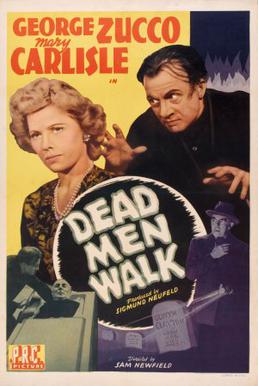
Most vampire films give you a stranger. Dead Men Walk (1943) gives you something far more unsettling — a man haunted by his own face. George Zucco plays both a small-town physician and the occult-obsessed twin brother he quietly murdered, who then claws back from the grave with a vampire’s appetite and a specific target in mind. Produced by Producers Releasing Corporation on a shoestring budget and running just 64 minutes, this forgotten 1943 horror film punches above its weight in ways that its modest reputation entirely fails to communicate. It’s in the public domain. You can watch it free right now. And it’s stranger than almost anything else you’ll find from that year.
Dead Men Walk 1943 — Movie Overview Table
| Detail | Information |
|---|---|
| Title | Dead Men Walk |
| Release Year | 1943 |
| Country | United States |
| Runtime | 64 minutes |
| Language | English |
| Format | Black & White, Sound |
| Director | Sam Newfield |
| Producer | Sigmund Neufeld |
| Screenplay | Fred Myton (original story and screenplay) |
| Studio | Producers Releasing Corporation (PRC) |
| Original Distributor | Producers Releasing Corporation (PRC) |
| Reissued | 1948 — Madison Pictures Inc. |
| Genre | Horror, Vampire |
| IMDb Rating | 3.58/10 |
| Public Domain | Yes — freely available to watch and download |
Full Cast Table — Dead Men Walk (1943)
| Actor | Role |
|---|---|
| George Zucco | Dr. Lloyd Clayton / Dr. Elwyn Clayton (dual role) |
| Mary Carlisle | Gayle Clayton |
| Nedrick Young | Dr. David Bentley |
| Dwight Frye | Zolarr |
| Fern Emmett | Kate |
| Robert Strange | Wilkins (Harper in credits) |
| Hal Price | Sheriff Losen |
| Sam Flint | Minister |
Why Dead Men Walk 1943 Deserves More Attention Than Its Rating Suggests
A 3.58 on IMDb from a small voter base tells you almost nothing useful about this film. What it doesn’t tell you: Dead Men Walk is one of a very small number of early 1940s horror films built around a genuine dual-performance challenge, casts one of Hollywood’s most reliable B-picture scene-stealers in a double role, and features Dwight Frye in one of his final screen appearances before his death in 1943.
PRC — Producers Releasing Corporation — sat at the absolute bottom of Hollywood’s Poverty Row hierarchy. Its budgets were minimal. Its schedules were brutal. And yet, within those constraints, Sam Newfield and writer Fred Myton built something that holds together more coherently than many better-funded horror productions of the same era.
PRC and Poverty Row Horror — The Creative Context
By 1943, Universal had largely locked down the prestige end of American horror filmmaking — Frankenstein, Dracula, The Wolf Man. Poverty Row studios like PRC, Monogram, and Republic found their space in the gaps: shorter runtimes, faster turnarounds, cheaper talent. What they produced was rougher, yes — but occasionally more willing to take structural risks that a studio with a franchise to protect would never attempt.
Dead Men Walk is a direct product of that environment. Its premise — a physician who murders his occultist twin brother, only for that brother to return as a vampire bent on personal revenge — is both more psychologically specific and more narratively compact than most major studio horror of the period. The film doesn’t waste time on atmosphere it can’t afford to build. It moves.
George Zucco in a Dual Role — The Film’s Real Achievement
George Zucco was, by 1943, the go-to face for educated villainy in B-picture horror. His clipped delivery, precise physical control, and ability to project cold intelligence while remaining entirely watchable made him invaluable to directors working fast on tight budgets. In Dead Men Walk, he plays both brothers: the quietly decent Dr. Lloyd Clayton and the predatory, undead Dr. Elwyn Clayton.
The structural challenge this creates is more demanding than it first appears. Zucco has to make both men distinct enough that you never confuse them, while also making it credible that these are two people who grew up identical. He manages it through bearing alone — Lloyd carries himself with the slight stoop of a man weighed down by a secret, Elwyn with the fluid confidence of someone who no longer answers to physical laws.
For a 64-minute PRC production, that’s a genuinely impressive piece of acting work. Zucco was capable of far more than Poverty Row usually asked of him, and Dead Men Walk gives him an unusually broad canvas to demonstrate it.
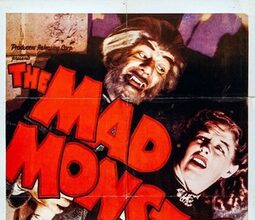
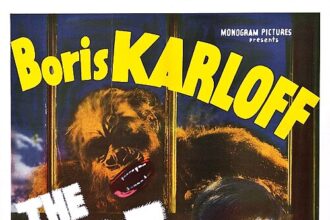
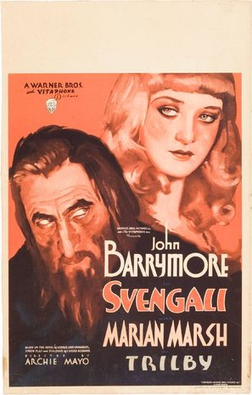
Full Plot Summary — Dead Men Walk (1943)
The film opens at the funeral of Dr. Elwyn Clayton — a practitioner of the occult whose deep involvement in dark arts has made him a danger to those around him. Attending the funeral is his twin brother, Dr. Lloyd Clayton, the well-regarded physician of a small American town. What no one else at the service knows: Lloyd is the one who killed Elwyn. He acted, as he will later insist, in self-defense — his brother had become something monstrous, and Lloyd saw no other option.
Elwyn’s hunchbacked assistant Zolarr — played by Dwight Frye — is not convinced. He confronts Lloyd directly, accusing him of murder. Lloyd holds firm: it was self-defense, nothing more. Zolarr retreats, but his loyalty to his dead master does not.
The Return — Elwyn Rises as a Vampire
Elwyn had gone too deep into the occult sciences before his death. With Zolarr’s help, that knowledge proves enough to pull him back — not as a man, but as a vampire. He returns with a single purpose: to destroy Lloyd, and to do it by targeting the person Lloyd loves most — his young niece Gayle, played by Mary Carlisle.
The revenge structure is deliberately personal. Elwyn doesn’t want Lloyd simply dead. He wants him ruined first — watching Gayle sicken and fade under a vampire’s influence while the town turns its suspicion on the physician who can’t explain what’s happening to his own family.
Lloyd’s Impossible Position
This is where Dead Men Walk does something smarter than most Poverty Row horror bothers to attempt. Lloyd cannot tell anyone what is happening without confessing to murder. He cannot seek help without exposing his secret. He watches Gayle deteriorate and must appear to the town — and to Gayle’s young physician fiancé, Dr. David Bentley — as simply a concerned uncle, when in reality he understands exactly what is draining her strength every night.
That dramatic irony — the audience knowing what the other characters cannot — gives the film its tension. It’s not the vampire that’s frightening so much as Lloyd’s trapped position: a man punished for an act he genuinely believed was necessary, by the very person he killed to protect others from.
The Resolution
The film moves toward its conclusion with the urgency that a 64-minute runtime demands. Dr. Bentley, initially skeptical, is forced to confront evidence he cannot dismiss. The truth about Elwyn reaches the people who need to act on it. Zolarr’s fanatical loyalty drives the final sequence as the living and the undead converge on a resolution that the film earns through consistent logic rather than last-minute convenience.
Dwight Frye as Zolarr — A Career-Defining Final Performance
Dwight Frye died on November 7, 1943, of a heart attack at age 44. Dead Men Walk, released earlier that same year, stands as one of his last significant screen appearances — and Zolarr is exactly the kind of role Frye had spent his career perfecting.
Frye had been typecast almost immediately after his iconic work as Renfield in Universal’s Dracula (1931) and Fritz in Frankenstein (1931). Hollywood saw a thin, intense man who could play obsessive devotion to monstrous masters, and gave him variation after variation of that template. Zolarr — hunched, fiercely loyal to the undead Elwyn, genuinely threatening in his willingness to do whatever his master requires — fits that mold precisely.
What Frye brings to Zolarr that lifts the character above the template is a quality of genuine belief. Zolarr isn’t a minion who obeys out of fear. He serves Elwyn with something that reads as devotion — a terrifying conviction that his master’s cause is just. That makes him more unsettling than a dozen sneering henchmen, and Frye communicates it entirely through physical presence and a quality of watchful stillness that the camera catches perfectly.
Sam Newfield — The Director Who Made Poverty Row Work
Sam Newfield directed over 250 films across his career — a number that sounds impossible until you understand the production culture he operated in. At PRC and other Poverty Row outfits, a director’s primary skill was speed. Newfield had it in extraordinary quantity.
What separated Newfield from the purely mechanical directors of his era was his ability to keep performances coherent under conditions that might reasonably produce chaos. Dead Men Walk holds together as a narrative because Newfield understood how to block scenes economically, how to use his cast’s existing skills rather than fight against them, and how to make a limited set feel like a complete world.
The film is not a masterwork of direction. But it’s a genuinely competent one — and at PRC in 1943, genuine competence under brutal constraints was itself a form of craft.
Where to Watch Dead Men Walk (1943) Free Online
Dead Men Walk is in the public domain and legally available across multiple platforms at no cost.
| Platform | Format | Cost |
|---|---|---|
| Internet Archive | Stream + Download (multiple formats) | Free |
| YouTube | Stream | Free |
| Public Domain Movies | Stream | Free |
Dead Men Walk (1943) on Internet Archive:
The Internet Archive hosts the film for both streaming and free download in multiple formats. No account required.
Is Dead Men Walk (1943) in the Public Domain?
Yes. All American films produced before 1928 whose copyrights were not renewed under the pre-1978 U.S. copyright system are in the public domain — and Dead Men Walk (1943) falls squarely within that category as a pre-1978 film whose copyright was never renewed.
You can legally stream, download, share, and screen this film in educational contexts without restriction or payment.
Critical Reception — What Viewers Actually Think
The film holds a 3.58 out of 10 on IMDb — a rating that reflects two things: the low expectations most viewers bring to PRC horror, and the fact that Dead Men Walk is genuinely rough around the edges in ways that casual viewers find frustrating.
But the viewers who seek it out specifically — fans of George Zucco, of Dwight Frye’s final work, of Poverty Row horror as a genre — tend to find more in it than that number suggests. The dual performance, the personal revenge structure, and Frye’s presence in an unusually meaty role give the film a texture that distinguishes it from the generic monster-of-the-week productions that made up most of PRC’s output.
The most honest critical framing is this: Dead Men Walk is not a great horror film. It is, however, a surprisingly coherent one — built around a specific dramatic idea executed with enough consistency to justify 64 minutes of your attention, especially if you’re already interested in either of its two leads.
Frequently Asked Questions — Dead Men Walk 1943
Q: What is Dead Men Walk (1943) about?
A small-town physician secretly murders his occultist twin brother to protect society, only for that brother to return from the grave as a vampire. The undead twin then targets the physician’s young niece as part of a calculated revenge — forcing the doctor into an impossible position where seeking help means confessing to murder.
Q: Is Dead Men Walk 1943 in the public domain?
Yes. The film’s copyright was never renewed under the pre-1978 U.S. copyright system, placing it firmly in the public domain. You can legally stream, download, and share it at no cost.
Q: Who plays the dual role in Dead Men Walk?
George Zucco plays both Dr. Lloyd Clayton — the physician protagonist — and Dr. Elwyn Clayton, the murdered twin who returns as a vampire. The dual performance is the film’s central casting achievement.
Q: Who directed Dead Men Walk (1943)?
Sam Newfield directed the film for Producers Releasing Corporation (PRC). Fred Myton wrote the original story and screenplay, and Sigmund Neufeld produced it.
Q: What was Dwight Frye’s role in Dead Men Walk?
Dwight Frye plays Zolarr, the hunchbacked assistant fanatically loyal to the undead Elwyn Clayton. It was one of Frye’s final screen performances before his death in November 1943 at age 44.
Q: Who plays Gayle Clayton in Dead Men Walk?
Mary Carlisle plays Gayle Clayton, the physician’s niece who becomes the vampire’s primary target as part of his revenge against her uncle.
Q: How long is Dead Men Walk (1943)?
The film runs approximately 64 minutes — a single-feature runtime typical of PRC productions, which prioritized tight, fast-moving narratives over extended running times.
Q: Where can I watch Dead Men Walk 1943 for free?
Dead Men Walk is freely available on the Internet Archive, YouTube, and Public Domain Movies. All versions are legal to stream and download under public domain status.
Q: What studio made Dead Men Walk?
Producers Releasing Corporation (PRC), one of Hollywood’s Poverty Row studios, produced the film. It was reissued in the United States in 1948 by Madison Pictures Inc.
Related Free Classic Horror and Silent Films
If Dead Men Walk (1943) pulled you into Poverty Row horror and public domain classics, these are the natural next step:
- Public Domain Horror Movies – Free Classic Scary Films Online
- Public Domain Movies List – All Free Classic Films (Complete Guide)
- Between Showers (1914) – Early Chaplin Short | Full Free Classic Film
- Guest in the House (1944) – Anne Baxter Film-Noir Drama | Full Public Domain Classic Movie Online Free
Movie Tags
Dead Men Walk 1943, Dead Men Walk full movie, watch Dead Men Walk free, Dead Men Walk public domain, George Zucco dual role, George Zucco vampire film, Dwight Frye final film, Dwight Frye 1943, Sam Newfield director, Producers Releasing Corporation horror, PRC horror films, Poverty Row horror 1940s, Mary Carlisle actress, Nedrick Young actor, vampire twin brother film, 1943 horror film, black and white horror movie, free horror movie online, classic vampire film public domain, Sigmund Neufeld producer