
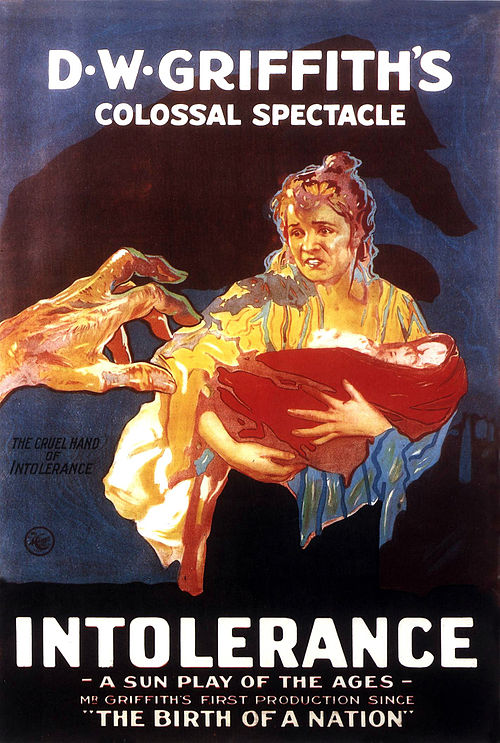
Experience D.W. Griffith’s Intolerance (1916) – the $2.5M silent epic that intercuts four historical tales of prejudice. Discover its colossal sets, controversy, and why it’s FREE to watch today.
The Mad Gamble That Broke Hollywood
Picture this: 1916. D.W. Griffith, stung by accusations of racism after The Birth of a Nation, bets everything on a 3.5-hour silent film with four parallel stories spanning 2,500 years. He builds a 300-foot Babylonian palace, hires 3,000 extras, and spends $2.5 million (≈$65M today). The result? A box-office disaster that bankrupted him… and became the most influential film in history.
Why This Feels Like Time Travel
Griffith doesn’t just tell a story – he throws you into a time-hopping whirlwind. Watch for these jaw-dropping sequences:
- 🏺 Babylon’s Last Stand (539 BC)
Constance Talmadge as a fierce mountain girl races through stone corridors as Cyrus the Great’s army smashes the gates. The siege scenes? Pure chaos – chariots flip, bodies fall from walls. You can almost taste the dust. - ✝️ Jerusalem’s Shadow (27 AD)
In haunting vignettes, Jesus carries his cross through jeering crowds. Griffith cuts from a wedding feast to the Crucifixion in seconds – a gut punch of irony. - ⚔️ St. Bartholomew’s Bloodbath (1572)
Catholic soldiers burst into Huguenot homes at night. Margery Wilson as “Brown Eyes” stares in terror as her family is slaughtered. The handheld camerawork feels shockingly modern. - 💔 The Mill Worker’s Noose (1914)
Mae Marsh frantically chases a train carrying the Governor’s pardon for her wrongly convicted husband. Griffith cross-cuts between her sprint and the prison gallows being tested – you’ll chew your nails raw.
The Secret Weapon: Lillian Gish as “Eternal Motherhood,” rocking a cradle between timelines. Her weary eyes whisper: “Will humanity ever learn?”
Behind the Chaos: 5 Insane Facts About Intolerance
- Sets So Big They Cast Shadows
Babylon’s walls dwarfed everything in Hollywood. Extras got lost in its courtyards. The set stood rotting for years – locals called it “Griffith’s Folly.” - Nudity? In 1916?!
Rumor has it Griffith filmed nude harem scenes. Censors destroyed the footage, but cinematographer Karl Brown swore: “Those Babylonian girls wore nothing but ambition.” - Stolen From the Future
Soviet directors like Eisenstein stole Griffith’s rapid-cut technique to fuel their revolution. Even today, every action movie owes this film a debt. - The Ultimate Flex
When actors complained, Griffith built a private amusement park on set with rollercoasters and hot lunches to keep 3,000 extras happy. - Cut to Survive
Original runtime: 8+ hours. Theatrical cuts butchered it – even now, missing reels of the St. Bartholomew’s massacre haunt film historians.
Where to Watch (Without the Grainy Ghosts)
💾 Download the Movie Intolerance (MP4)
⚠️ Heads Up: Silent films demand patience. Crank up the volume for Carl Davis’s thunderous 1989 score – it turns the film into a rock opera.
Why It Still Slaps in 2024
“Intolerance is cinema’s Sistine Chapel,” said Kubrick. “A madman’s dream that taught us how to dream.” Roger Ebert nailed it: “You don’t watch it – you survive it.”
For all its flaws (yes, Griffith’s racial blind spots linger), this is where movies grew up. The dizzying cross-cuts between a dying Babylonian and a trembling boy on the gallows? That’s the birth of cinematic language.
Funeral Fact: When Griffith died penniless in 1948, only three people attended his funeral. Today, Scorsese, Nolan, and Cuarón study his frames like scripture. Ironic? Absolutely. Fitting? You tell me.
Tags:
D.W. Griffith insanity, Babylon movie set, free silent films, film editing revolution, Mae Marsh actress, Constance Talmadge comedy, Lillian Gish eyes, historical epic fail, National Film Registry, public domain movies, where to watch Intolerance, St Bartholomew massacre film, Jesus Christ silent movie, early Hollywood scandals