

Deep in rural Texas, in an underground bunker furnished with two shelves of electronic junk and a chair on a platform with blinking lights, a former Nazi scientist named Professor Ernst Von Hauser is building a time machine to bring Adolf Hitler back from the moment before his death, resurrect the Third Reich, and change the outcome of World War II. Standing between him and this plan is a Texas police lieutenant who immediately assumes, upon hearing that a local drum majorette has disappeared near Confederate soldiers, that Nazis are responsible — which, in this film, is completely correct.
The Yesterday Machine (1963) is a regional science fiction picture made in Dallas, Texas, by Russ Marker on a budget that Tim Holt apparently comprised sixty percent of. It is 85 minutes long. It contains a chalkboard lecture on the theory of time travel. It is completely, irrevocably in the public domain. And it is one of the more earnestly deranged things that Texas regional cinema produced in the 1960s, which is saying something given the competition.
The Yesterday Machine 1963 — Movie Overview Table
| Detail | Information |
|---|---|
| Title | The Yesterday Machine |
| Production Year | Filmed March 1965, Dallas, Texas; copyright 1963; released variously as 1963, 1965, and 1966 |
| Country | United States |
| Runtime | 85 minutes |
| Genre | Science Fiction, Mad Scientist, Time Travel, Regional Cinema |
| Language | English |
| Format | Black & White, Mono |
| Director / Writer / Producer | Russ Marker |
| Executive Producer | Dan W. Holloway |
| Cinematography | Ralph K. Johnson |
| Music | Don Zimmers |
| Production Company | Carter Film Productions |
| Regional Context | Texas-based regional cinema; Russ Marker associate of Larry Buchanan |
| IMDb Rating | 3.9/10 |
| Public Domain | Yes — freely available to watch and download |
Full Cast Table — The Yesterday Machine (1963)
| Actor | Role |
|---|---|
| Tim Holt | Police Lt. Partane |
| James Britton | Jim Crandall (newspaper reporter) |
| Jack Herman | Professor Ernest Von Hauser (former Nazi scientist) |
| Ann Pellegrino | Sandy De Mar (“the girl with the orchid voice” — nightclub singer) |
| Robert Bob Kelly | Detective Lasky |
| Linda Jenkins | Margie De Mar (drum majorette / baton twirler) |
| Carol Gilley | Blonde Nurse |
| Jay Ramsey | Howie Ellison |
| Bill Thurman | Police Detective |
| Charles Young | Detective Wilson D. Blake |
| Olga Powell | Didiyama |
Texas Regional Cinema in the 1960s — The World This Film Lives In
To understand The Yesterday Machine, you need to understand the specific ecosystem of Texas regional filmmaking in the 1960s. It was a world defined by minimal budgets, local amateur talent, occasional professional imports, and an absolute absence of the institutional oversight that major studio productions carried. The result was films that looked like nothing being made in Hollywood — rougher, stranger, more genuinely eccentric because nobody was there to sand the edges off.
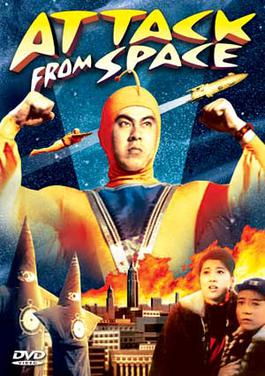
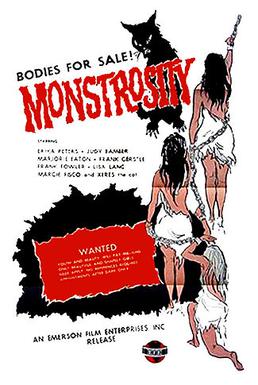
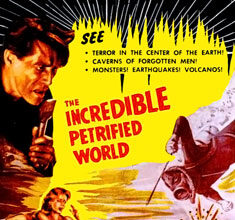
The most famous product of this ecosystem is Manos: The Hands of Fate (1966) — a film made in El Paso, Texas, by a fertilizer salesman who bet a friend he could make a movie. Larry Buchanan operated in the same Dallas-area milieu as Russ Marker, producing a series of zero-budget science fiction and horror pictures that Marker was associated with — and whose actors, including Bill Thurman, appear in The Yesterday Machine. These films were made by people who were genuinely trying. The gap between intention and execution is what makes them fascinating rather than simply bad.
One Amazon reviewer placed The Yesterday Machine directly in this tradition: “Some amazing bad films, with wonderful low budget charm, came out of Texas in the 1960s and this takes its place as a classic alongside them.” That assessment — honest about the quality, genuine about the charm — is the most useful framing for what you’re about to watch.
Full Plot Summary — The Yesterday Machine (1963)
A teenage couple’s car breaks down in rural Texas on their way to a football game. While roadside, they encounter men in Confederate uniforms. Thinking it’s a joke, they don’t immediately panic — until one of the men fires a musket and wounds one of them. The baton-twirling drum majorette Margie De Mar (Linda Jenkins) disappears entirely.
Police Lieutenant Partane (Tim Holt) is called in. His immediate working theory — that Confederate soldiers appearing in 1963 Texas is a Nazi operation — would seem delusional in any other film. Here it is simply correct. Meanwhile, newspaper reporter Jim Crandall (James Britton) is investigating the disappearance independently and tracks down Sandy De Mar (Ann Pellegrino), Margie’s sister and a nightclub singer billed by her club as “the girl with the orchid voice.” Sandy sings a song in that club that was written by director Russ Marker himself, which the film presents without apparent irony.
Professor Von Hauser — The Nazi in the Texas Bunker
Crandall and Sandy are transported into the underground laboratory of Professor Ernest Von Hauser (Jack Herman) — a former Nazi scientist hiding in rural Texas who has spent the years since World War II perfecting a time machine. Von Hauser’s specific plan: transport Adolf Hitler from the precise moment before his death to the present day and use him to establish a Fourth Reich. The time machine, as built on a Carter Film Productions budget, is a chair on a platform with four posts equipped with blinking lights. The electronic components are two shelves of assorted electronic junk.
Von Hauser is not merely a mad scientist — he is an enthusiastic mad scientist who has strong opinions about Einstein. Specifically, that his own theories are “far more advanced than Einstein’s.” Jack Herman plays him with a committed extravagance that the Science Fiction Encyclopedia describes as beyond words, and that one reviewer benchmarked against William Shatner: “Jack Herman’s over the top performance as Dr. Ernst Van Hauser is beyond words. William Shatner looks tame and controlled by comparison.”
The Chalkboard Scene — The Film’s Most Notorious Moment
Late in the film, Von Hauser pulls out a chalkboard and draws diagrams. He then delivers an extended lecture on the theory of time travel to the captured reporter. The lecture is thorough. The reporter’s responses suggest he is following along. The audience is invited to follow along as well.
Critic Paul Gaita’s pan of the film identified this scene as the moment the film’s “analogy to a period educational film reaches a terminal point.” He is not wrong. He is also not entirely right — the chalkboard scene is the film’s most purely committed sequence, the moment where Russ Marker most completely believed in what he was making. Von Hauser doesn’t just want to change history. He wants you to understand, at a theoretical level, how he intends to do it. That sincerity is the chalkboard scene’s actual quality, and it is different from mere padding.
The Confederate Soldiers — The Time Machine’s Primary Function
The Science Fiction Encyclopedia noted that the time machine in The Yesterday Machine is “chiefly used to bring people from the past into the present” rather than sending anyone backward — which inverts the usual time travel premise and is either an economical workaround for the difficulty of period set dressing or a genuinely interesting narrative choice, depending on how generously you’re approaching the material. The Confederate soldiers who set the plot in motion were displaced forward from the Civil War era. The film’s central threat comes from what Von Hauser plans to displace forward next.
Tim Holt — From The Treasure of the Sierra Madre to a Texas Bunker
Tim Holt is the film’s most significant casting decision and its most poignant presence. In 1948, Holt showed up opposite Humphrey Bogart and Walter Huston in John Huston’s The Treasure of the Sierra Madre — which is one of those most acclaimed American films of the decade, and where Holt’s take as the earnest young prospector Curtin is a career-defining kind of thing, still his best-remembered role.
The jump from The Treasure of the Sierra Madre (1948) to The Yesterday Machine (1963) takes roughly fifteen years, and a few notches down the exploitation movie rung ladder, though you know it’s not really the same sort of climb. Between them came a western career that peaked in the early 1950s, a period of near-retirement, and then a return to low-budget work in films like The Monster That Challenged the World (1957). Paul Gaita’s review positioned The Yesterday Machine as a step down from even that — and noted that Holt’s next and final film would be Herschell Gordon Lewis’ hillbilly exploitation picture This Stuff’ll Kill Ya! (1971), which would prove to be his screen farewell.
Within The Yesterday Machine, Holt is the film’s sole professional anchor — the only person on screen whose years of craft are visible in every scene. One Letterboxd reviewer’s observation that “he probably was 60% of the film’s budget” contains a specific truth: a film that could display Tim Holt’s name in its credits had something to sell that justified the expenditure. His Lieutenant Partane is played straight throughout, which provides the comedy of contrast with everything around him rather than contributing to it. The straight man in a Texas Nazi time travel film is doing real work.
Russ Marker — The Writer-Director-Producer Who Did Everything
Russ Marker wrote, directed, and produced The Yesterday Machine — a triple role common to zero-budget regional filmmaking where the person with the idea is also the person with the checkbook and the person making daily decisions on set. He also, apparently, wrote the nightclub song that Sandy De Mar performs in the film’s early sequences. A director who writes the songs his characters sing is either a complete auteur or someone who couldn’t afford a music supervisor. In Marker’s case, almost certainly the latter.
Marker was an associate of Larry Buchanan — the Dallas filmmaker who became famous in the mid-1960s for a series of American International Pictures remakes shot in Texas for almost no money, including Curse of the Swamp Creature (1966) and Zontar, the Thing from Venus (1966). The overlap between Marker’s and Buchanan’s casts — Bill Thurman appears in both filmographies — suggests a shared production community in Dallas during this period, a small ecosystem of people willing to make strange films for very little money and considerable enthusiasm.
The Yesterday Machine looks like one of the rare completed productions Marker directed, i mean not many. The film’s very being, it kind of stands as a certain form of filmmaking aspiration, the belief that a narrative worth saying, is worth saying even if there are hardly any resources , that regional cinema keeps it safer than any other corner of film history does.
The Release Date Problem — 1963, 1965, or 1966?
The film’s release date is honestly kind of hard to pin down, like, it really doesn’t want to cooperate. The copyright says 1963 (which, not great), and the Internet Archive mentions that the filming happened in March 1965, in Dallas. Still, a bunch of other places toss around release windows as 1963, 1965, or even 1966. The Science Fiction Encyclopedia kind of just shrugs at the whole mess, it acknowledges the ambiguity but doesent really untangle it.
This is one of those situations that shows up a lot in regional exploitation cinema, you know where the movie might be produced in one year, then sit in storage , or in some backlogged queue, for another year or two and then it finally gets rolled out across different regional markets at different moments… so there never is a single smooth national release story.
Practical note though: the film is there, it’s in the public domain, and you can watch it now whether it officially came out in 1963, 1965, or 1966.
Where to Watch The Yesterday Machine (1963) Free Online
The Yesterday Machine is in the public domain and legally available across multiple platforms at no cost.
| Platform | Format | Cost |
|---|---|---|
| Internet Archive | Stream + Download (multiple formats) | Free |
| YouTube | Stream | Free |
| Tubi | Stream (with ads) | Free |
| Public Domain Movies | Stream | Free |
The Yesterday Machine (1963) on Internet Archive:
Is The Yesterday Machine in the Public Domain?
Yes, the Yesterday Machine is in the public domain in the United States. So you can legally stream it, download it , share it, and even screen it without restriction or any payment. It is also freely available across multiple platforms at the same time, kind of directly because that public domain status is there in the background, and not really due to any hidden terms.
Critical Reception — What Viewers Actually Think
The film holds a 3.9 out of 10 on IMDb — the specific rating of a film that divides viewers between those who find it unwatchably slow and those who find it exactly the kind of sincerely deranged regional cult object they came looking for. Both responses are legitimate.
Paul Gaita’s pan, quoted in the source material, identifies the film’s primary problem accurately: the pacing is genuinely slow, the chalkboard lecture is genuinely prolonged, and the space between the interesting premise and the execution of it is wider than 85 minutes can easily bridge. Those are real issues.
The counterargument — made by multiple Amazon reviewers, Letterboxd commenters, and the Science Fiction Encyclopedia alike — is that the film’s problems are inseparable from its pleasures. Jack Herman’s Von Hauser is entertaining precisely because it is beyond control. The Confederate soldiers appearing in Texas football game traffic are entertaining precisely because the film treats this as a solvable police problem. The baton twirler as the film’s initial victim is entertaining precisely because nobody involved appears to have questioned whether a drum majorette was the right choice.
One Letterboxd reviewer provided the most useful summary: “Watched on the ‘Mads Are Back’ livestream. Obviously I would not actually want Hitler to be brought back from his well-deserved oblivion, but if you’re going to make a sci-fi movie about a Nazi scientist trying to bring Hitler back from the past, he’s gotta show up eventually. That’s the rule of Chekhov’s Hitler.” The film does not fully satisfy this rule. That unsatisfied promise is either its most maddening quality or its funniest, depending entirely on your disposition.
Frequently Asked Questions — The Yesterday Machine 1963
Q: What is The Yesterday Machine about?
A former Nazi scientist named Professor Von Hauser, hiding in an underground bunker in rural Texas, has built a time machine with the specific goal of transporting Adolf Hitler from the moment before his death to the present day to establish a Fourth Reich. His plans are complicated by a disappearing drum majorette, her nightclub singer sister, a newspaper reporter, and a Texas police lieutenant who immediately knows Confederate soldiers in 1963 means Nazis.
Q: Is The Yesterday Machine in the public domain?
Yes. The Yesterday Machine is in the public domain in the United States. You can legally stream, download, and share it for free on the Internet Archive, YouTube, Tubi, and Public Domain Movies.
Q: Who directed The Yesterday Machine?
Russ Marker wrote, directed, and produced the film for Carter Film Productions. He was a Texas-based filmmaker and associate of Larry Buchanan — another Dallas-area filmmaker known for low-budget regional science fiction and horror pictures. Marker also apparently wrote the nightclub song performed in the film.
Q: Who is Tim Holt and why is he in this film?
Tim Holt was a major Hollywood actor whose best-known role was as the idealistic young prospector Curtin in John Huston’s The Treasure of the Sierra Madre (1948), opposite Humphrey Bogart. By 1963, his career had declined through westerns and B-pictures to regional exploitation. The Yesterday Machine was one of his final films; his last screen appearance was in Herschell Gordon Lewis’ This Stuff’ll Kill Ya! (1971). One reviewer estimated he comprised approximately 60% of the film’s budget.
Q: What is the famous chalkboard scene?
Late in the film, Professor Von Hauser pulls out a chalkboard and draws diagrams to explain the theory of time travel to the captured reporter. The scene is extended, sincere, and has divided critics between those who find it educational-film tedium and those who find it the most fully committed sequence in the film — evidence of a filmmaker who genuinely believed in what he was making.
Q: How does the time machine work in The Yesterday Machine?
The time machine in the film primarily brings people from the past into the present rather than sending characters backward — Confederate soldiers from the Civil War era are displaced forward into 1963 Texas. The machine itself is a chair on a platform with four posts equipped with blinking lights, surrounded by two shelves of assorted electronic junk.
Q: When was The Yesterday Machine released?
The release date is genuinely uncertain. Various sources give 1963, 1965, and 1966. The copyright carries a 1963 date, but Internet Archive metadata indicates the film was shot in March 1965 in Dallas, Texas. This kind of ambiguity is common in regional exploitation cinema with irregular distribution patterns.
Q: What is Texas regional cinema of the 1960s?
Texas regional cinema of the 1960s was an ecosystem of zero-budget independent productions made in Dallas and surrounding areas by filmmakers like Larry Buchanan and Russ Marker, typically featuring local amateur talent, occasional professional imports, and premises that major studios would never have greenlit. Manos: The Hands of Fate (1966) is its most famous product. The Yesterday Machine occupies the same cultural space.
Q: Is Jack Herman’s performance as Von Hauser actually that over the top?
Multiple reviewers across IMDb, Letterboxd, and Amazon independently describe it as beyond description, with one specifically noting that William Shatner looks tame and controlled by comparison. The Science Fiction Encyclopedia also acknowledges the performance’s specific quality. The consensus is consistent: yes, it is that over the top.
Q: Where can I watch The Yesterday Machine for free?
The Yesterday Machine is freely available on the Internet Archive, YouTube, Tubi, and Public Domain Movies. All versions are legal to stream and download under public domain status.
Related Free Classic Sci-Fi and Cult Films
If The Yesterday Machine (1963) sent you into regional cult cinema and public domain science fiction, these are the natural titles to explore next:
- Public Domain Cartoons
- Public Domain Horror Movies – Free Classic Scary Films Online
- Bird of Paradise (1932) Full Movie Review, Plot, Cast & Free Classic Romance Film
- Public Domain Movies List – All Free Classic Films (Complete Guide)
Movie Tags
The Yesterday Machine 1963, The Yesterday Machine full movie, watch The Yesterday Machine free, The Yesterday Machine public domain, Russ Marker director, Carter Film Productions Texas, Tim Holt final films, Tim Holt Treasure Sierra Madre, Jack Herman Von Hauser actor, Nazi time travel film, Hitler time machine movie, Texas regional cinema 1960s, Larry Buchanan films Texas, Bill Thurman actor, Dallas Texas filmmaking 1960s, cult science fiction public domain, mad scientist film 1960s, Confederate soldiers time travel, free cult sci-fi movie online, chalkboard time travel explanation film