

Eleven years after this film wrapped, Tim McCoy married a woman who had interviewed Adolf Hitler three times, attended Hermann Göring’s wedding as a personal guest, sat in Hitler’s private box at the 1936 Berlin Olympics, and carried on a wartime affair with a young Navy ensign named John F. Kennedy serious enough that J. Edgar Hoover personally ordered FBI surveillance of both of them. Her name was Inga Arvad. The Bureau compiled 1,200 pages on her without ever proving she was the Nazi spy they suspected. She married McCoy in 1947, settled into Wyoming and Arizona ranch life, and stayed his wife until her death in 1973. None of that had happened yet when McCoy made Aces and Eights in 1936 — he was simply Hollywood’s most reliably authentic cowboy, playing a gentleman gambler descended in spirit from Wild Bill Hickok, in a 62-minute Puritan Pictures western that exists today mostly in battered, second-generation public domain prints.
McCoy’s authenticity wasn’t a studio invention. He’d left college in Chicago after seeing a Wild West show, gone to work an actual Wyoming ranch, learned Plains Indian sign language well enough that the Arapaho tribe of the Wind River Reservation adopted him as a brother and named him High Eagle, and became — at 28 — reportedly the youngest brigadier general in U.S. Army history as Wyoming’s adjutant general, a position he held between his First World War service and his eventual recruitment into pictures. He didn’t act his way into cowboy stardom. He was simply filmed being, with minor adjustments, who he already was.
The film was directed by Sam Newfield, produced by his brother Sigmund Neufeld — the same fraternal arrangement that would later make PRC the dominant force in poverty row horror — for Puritan Pictures, a studio whose entire 1936 output seems to consist of Tim McCoy westerns shot back to back with the same crew. Aces and Eights opens with a prologue dramatizing the real death of Wild Bill Hickok, killed holding two pair — aces and eights — a hand that entered American folklore as the “dead man’s hand.” McCoy’s character inherits that legend’s moral authority without inheriting its luck. He doesn’t carry a gun. He doesn’t need one.
Aces and Eights 1936 — Movie Overview Table
| Detail | Information |
|---|---|
| Title | Aces and Eights |
| Release Date | June 6, 1936 |
| Country | United States |
| Runtime | 62 minutes |
| Genre | Western, Action, Drama |
| Language | English |
| Format | Black & White, Sound |
| Director | Sam Newfield |
| Producers | Sigmund Neufeld; Leslie Simmonds |
| Story | George Arthur Durlam |
| Screenplay | Joseph O’Donnell |
| Cinematography | Jack Greenhalgh; James Diamond |
| Editors | John English; Robert Jahns |
| Production Company | Puritan Pictures (Excelsior Pictures Corporation) |
| Notable | Opens with prologue dramatizing the death of Wild Bill Hickok and the origin of the “dead man’s hand” |
| Lead Actor’s Real-Life Background | Tim McCoy — former Wyoming Adjutant General, brevet Brigadier General, adopted Arapaho tribal member (“High Eagle”) |
| IMDb / Audience Rating | 4.0–5.4/10 (varies by source) |
| Public Domain | Yes — freely available to stream and download, though many circulating copies are duped from poor-quality sources |
Full Cast — Aces and Eights (1936)
| Actor | Role |
|---|---|
| Tim McCoy | ‘Gentleman’ Tim Madigan |
| Luana Walters | Juanita Hernandez |
| Rex Lease | Jose Hernandez |
| Wheeler Oakman | Ace Morgan |
| J. Frank Glendon | Amos Harden |
| Charles Stevens | Captain (Felipe) de Lopez |
| Earle Hodgins | Marshal |
| Jimmy Aubrey | Sidekick Lucky |
| Joseph W. Girard | Don Julio Hernandez |
| Karl Hackett | Wild Bill Hickok / Prologue Narrator |
| Frank Ellis | Deputy (uncredited) |
| John Merton | Card Sharp (uncredited) |
Tim McCoy — The Cowboy Star Who Wasn’t Acting
McCoy was born in Saginaw, Michigan, the son of an Irish immigrant Civil War veteran who became the city’s police chief. He attended St. Ignatius College in Chicago, saw a Wild West show, and left school entirely to work a Wyoming ranch — the kind of decision that, in most biographies, gets treated as a footnote and in McCoy’s case turned out to define the next six decades of his life. He became, by every account, a genuine expert horseman, roper, and rodeo competitor, and developed enough fluency in Plains Indian sign language and tribal custom that the Arapaho of the Wind River Reservation accepted him as a brother and the Blackfeet separately named him Black Eagle.
He enlisted when America entered the First World War, was commissioned, and rose to lieutenant colonel. Returning to Wyoming afterward, Governor Bob Carey named him the state’s Adjutant General — a post carrying a brevet rank of Brigadier General that reportedly made McCoy, at 28, the youngest general officer in the U.S. Army at the time. None of this prepared anyone for what happened in 1922, when Famous Players-Lasky needed authentic Native American participants for the epic The Covered Wagon (1923) and McCoy’s name came up. He resigned his state position, recruited roughly 500 Native Americans from Wyoming reservations, brought them to the Utah location, and served as technical advisor — a job that put him in front of a camera for the first time and, almost by accident, launched an acting career that would run nearly a hundred westerns deep.
He served again in World War II, this time in Europe with the Army Air Corps, rising to Colonel. He was popular enough with children that Wheaties put him on cereal boxes. After Hollywood, he toured with the Ringling Brothers and Barnum and Bailey Circus and ran his own traveling Wild West show. In 1947 he married Inga Arvad — by then divorced from her second husband, her affair with JFK behind her, the FBI’s suspicions about her Nazi connections never substantiated — and the two of them settled first onto McCoy’s Wyoming ranch and later in Bucks County, Pennsylvania, and finally Nogales, Arizona. McCoy died at the Army hospital at Fort Huachuca in 1978, at 86, having lived a life that made the “gentleman gambler who doesn’t carry a gun” persona of Aces and Eights look, if anything, like an understatement of what he was actually capable of.
Sam Newfield, Sigmund Neufeld, and Puritan Pictures’ Tim McCoy Machine
By 1936, Sam Newfield was already establishing the working pattern that would eventually make him, by some counts, the most prolific director in sound-era American film history — over 250 features across a career built on speed, low budgets, and a stable of reliable collaborators. His brother Sigmund Neufeld produced. Cinematographer Jack Greenhalgh shot. The arrangement repeated itself across dozens of pictures for Puritan, and in 1936 alone the Newfield-Neufeld combination put out a remarkable string of Tim McCoy vehicles: Border Caballero in March, Lightnin’ Bill Carson in April, Aces and Eights in June, The Lion’s Den in July, and The Traitor in August — five McCoy westerns inside six months, all from essentially the same production team.
That pace explains both the film’s specific virtues and its specific limitations. Aces and Eights runs a tight 62 minutes, gets its plot moving within the first reel via a Wild Bill Hickok prologue that does real narrative work — establishing the legend of the “dead man’s hand” before transferring its moral weight directly onto McCoy’s Madigan — and never lingers. What it doesn’t have is room for the kind of nuance a less rushed production might have built into its supporting characters. The Letterboxd consensus calls it “a little convoluted” but ultimately coherent by the closing reel, and multiple reviewers single out the prologue’s connective device — linking McCoy’s fictional gambler directly to Hickok’s historical death — as more thoughtfully constructed than the standard poverty row western typically bothered with.
Full Plot Summary — Aces and Eights (1936)
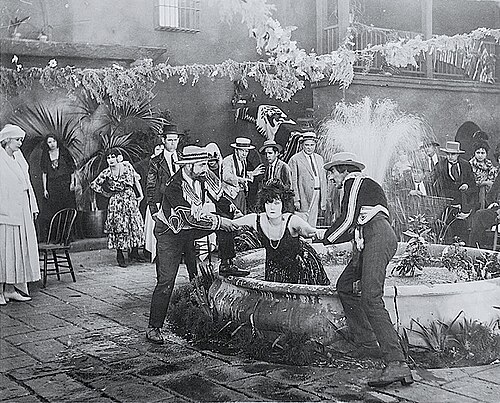
The film opens with a prologue: Wild Bill Hickok is assassinated during a poker game while holding two pair — aces and eights — the hand that becomes known across the West as the “death hand.” Tim Madigan (Tim McCoy) is then introduced as Hickok’s spiritual successor: a gentleman gambler, immaculately dressed, who refuses to carry a gun and relies entirely on skill, nerve, and reputation.
An Accusation, a Shot From a Tree, and a Fugitive
During a poker game, Madigan accuses a fellow professional gambler of cheating. Jose Hernandez (Rex Lease), a young man who had earlier lost heavily to that same gambler, overhears the accusation and pulls his own gun on the man, demanding his money back. Moments later, the gambler is killed by a bullet fired from a nearby tree — with Madigan nowhere in sight when it happens. The marshal (Earle Hodgins) nonetheless assumes Madigan’s guilt and pursues him to the state border, where Madigan outwits him and crosses into California, settling in the town of Roaring Gulch.
The Hernandez Hacienda and the Swindlers
In Roaring Gulch, Madigan reconnects with Jose Hernandez, who offers his father’s hacienda as a place to rest. Don Julio Hernandez (Joseph W. Girard) runs the family ranch, and his daughter Juanita (Luana Walters) becomes the film’s romantic focus alongside Madigan. The Hernandez family’s land is under active threat from a coordinated swindle — Ace Morgan (Wheeler Oakman) and Amos Harden (J. Frank Glendon) working a scheme to separate the family from their property through cheating, intimidation, and manipulation of local authority, with Captain de Lopez (Charles Stevens) tangled somewhere in the conflict between legitimate law enforcement and the swindlers’ interests.
Cards as Weapons
Madigan’s intervention plays out almost entirely through cards rather than gunplay — the structural joke and the genuine point of the character being that a man with no weapon and total command of a card table can dismantle armed swindlers more effectively than a marshal with a badge and a gun. The Letterboxd review that called the film “a Z western” for “poker fans” who like watching an “unarmed card wrangler” gamble his way to the end credits captured the film’s actual mechanics precisely: this is a western where the showdowns happen across a table, and the resolution depends on exposing fraud rather than outdrawing anyone. The Hernandez ranch is saved, the swindle exposed, and Madigan’s name — falsely tied to the original gambler’s death — gets cleared along the way.
Luana Walters — The Rodeo Discovery Who Became Superman’s Mother
Luana Walters found her way into pictures with the kind of real-cowgirl background that sort of matched McCoy’s in miniature: she was a true horsewoman, spotted after she won a women’s bucking contest at a Palm Springs rodeo, and of course some movie scout was there watching, for reasons that feel almost too neat. Douglas Fairbanks Sr. sensed there was something there and set up a screen test before he left suddenly for Europe; later producer Joe Schenck caught her dancing at the Cocoanut Grove, then he looked at the unfinished Fairbanks test, and signed her up with United Artists.
After that came a career that, per the IMDb bio, is described kinda bluntly as “erratic and, for the most part, quite frustrating.” Walters ended up becoming one of the era’s dependable B-western leading ladies, showing up opposite Gene Autry, Buck Jones, McCoy, Charles Starrett, and Bill Elliott across a steady run of Poverty Row productions. Still, she never really made the jump into stable A-picture stardom. The strangest part is her longest lasting credit, which decades later turned out to be something most people at the time wouldn’t have predicted at all: Walters was the first actress to play Superman’s biological mother, Lara, on screen, in the 1948 Columbia serial Superman starring Kirk Alyn. It’s a little pop-culture detail that somehow survived, far longer than the bulk of her western work. She also shared the screen with Bela Lugosi in The Corpse Vanishes (1942), a film that later got turned into a kind of riff material, even referenced by MST3K. Her last screen appearance was in 1956’s The She-Creature, directed by Edward L. Cahn. She passed away in Los Angeles in 1963, aged 50.
Where to Watch Aces and Eights (1936) Free Online
Aces and Eights is in the public domain and legally available across multiple platforms at no cost. Print quality varies significantly — the original copyright was never renewed, and many circulating copies have been duped from second- or third-generation sources, sometimes with visible quality loss or rough editing.
| Platform | Format | Cost |
|---|---|---|
| Internet Archive | Stream + Download (multiple formats) | Free |
| YouTube | Stream (multiple uploads; quality varies) | Free |
| Plex | Stream | Free |
| Google Play Movies | Stream | Free |
| Public Domain Movies | Stream | Free |
Aces and Eights (1936) on Internet Archive:
Is Aces and Eights (1936) in the Public Domain?
Yeah, so Aces and Eights is in the public domain here in the United States. The original copyright holder kinda dropped the renewal, so the protection just didn’t stick, and as a result the movie can be copied, streamed, downloaded, and sold with no legal restrictions. That’s basically why there are so many DVD and VHS copies floating around from all these decades, and why the quality ends up being all over the place. Anyone could legally make a copy and then sell it, and a lot of people did it using older, grungier, multiple-generation-removed source prints, not from some clean master. The Internet Archive generally offers one of the more watchable versions for free streaming and download.
Critical Reception — Then and Now
Modern audience ratings sit in a wide range depending on the source — around 4.0 on some public domain databases, 5.4 on Plex and JustWatch — which roughly tracks the genuine split in how viewers respond to it. Letterboxd reviewers have been more generous than the raw numbers suggest: one reviewer noted that “the other reviews of this are so bad, I kind of want to give it 5 stars,” pointing specifically to McCoy’s authenticity as “a real cowboy” as a quality that elevates the film above the standard Poverty Row western. Another singled out Earle Hodgins’s performance as the marshal and praised the prologue’s connection of Madigan to the Wild Bill Hickok legend as unusually well-constructed for the budget tier.
The more critical assessments tend to focus on the supporting cast’s uneven delivery and a plot that several viewers found “a little convoluted” before it resolves. What seems to unite most modern viewers, regardless of star rating, is appreciation for the specific novelty of an unarmed protagonist whose competence is expressed entirely through cards rather than firearms — a structural choice that distinguishes Aces and Eights from the standard six-shooter resolution that defines most B-westerns of its era, and one that draws directly on McCoy’s own legend as a man whose authority never actually required a weapon to back it up.
Frequently Asked Questions — Aces and Eights (1936)
Q: What is Aces and Eights (1936) about?
A gentleman gambler named Tim Madigan, who refuses to carry a gun, is falsely accused of murder after a poker game and flees across a state border. He settles with a Mexican family, the Hernandezes, whose ranch is being threatened by a pair of swindlers. Madigan uses his card skills and reputation to expose the fraud, save the ranch, and clear his name.
Q: Is Aces and Eights in the public domain?
Yes. The original copyright holder failed to renew the film’s copyright, placing it in the public domain in the United States. It can be freely streamed, downloaded, duplicated, and sold. The Internet Archive, YouTube, Plex, and Google Play Movies all carry free versions, though print quality varies significantly across different uploads and releases.
Q: Who plays the lead role of Tim Madigan?
Tim McCoy plays ‘Gentleman’ Tim Madigan. McCoy was a genuine Wyoming rancher, decorated military officer (serving in both World Wars), and adopted member of the Arapaho tribe before becoming one of Hollywood’s most popular Western stars in the 1920s and 1930s. His authenticity as an expert horseman and marksman was a key part of his screen appeal.
Q: How does the film connect to Wild Bill Hickok?
The film opens with a prologue dramatizing Wild Bill Hickok’s real-life assassination during a poker game in which he held two pair, aces and eights — the hand that became known in Western folklore as the ‘dead man’s hand.’ Tim Madigan is then introduced as Hickok’s spiritual successor, a gentleman gambler who carries forward that legacy without carrying a weapon.
Q: Who directed and produced Aces and Eights?
Sam Newfield directed the film, and his brother Sigmund Neufeld produced it alongside Leslie Simmonds, for Puritan Pictures. The Newfield-Neufeld team produced an unusually high volume of Tim McCoy westerns in 1936 alone, including Border Caballero, Lightnin’ Bill Carson, The Lion’s Den, and The Traitor, all released within the same six-month period.
Q: What happened to Tim McCoy later in life?
After his acting career, McCoy served again in World War II with the Army Air Corps, rising to Colonel. In 1947 he married Inga Arvad, a Danish journalist previously linked romantically to John F. Kennedy and investigated by the FBI on suspicion of being a Nazi spy (suspicions that were never substantiated). The couple settled on ranches in Wyoming, Pennsylvania, and Arizona. McCoy died in 1978 at age 86.
Q: Who plays Juanita Hernandez, and what else was she known for?
Luana Walters plays Juanita Hernandez. Walters was a B-western leading lady throughout the 1930s and 1940s, appearing opposite stars including Gene Autry and Buck Jones. She is also notable for being the first actress to portray Superman’s biological mother, Lara, in the 1948 Columbia film serial Superman, and for co-starring opposite Bela Lugosi in The Corpse Vanishes (1942).
Q: Why does Tim Madigan refuse to carry a gun?
The character’s refusal to carry a weapon is central to the film’s structural conceit: Madigan resolves the central conflict entirely through card-table skill and exposing fraud rather than gunplay, distinguishing the film from the typical six-shooter resolution common to B-westerns of the era. This mirrors Tim McCoy’s own real-life reputation as a man whose authority rarely required a weapon to enforce.
Q: Why do so many public domain copies of this film look different in quality?
Because the film’s copyright was never renewed, anyone could legally duplicate and sell copies, leading to a wide range of VHS and DVD releases over the decades sourced from second- or third-generation prints rather than a single clean master. This is common among public domain B-westerns from the 1930s, and viewers should expect some quality variation across different free or retail copies.
Q: Where can I watch Aces and Eights (1936) for free?
Aces and Eights is freely available on the Internet Archive, YouTube, Plex, Google Play Movies, and Public Domain Movies. All versions are legal to stream and download under the film’s public domain status in the United States.
Related Free Classic Westerns
If Aces and Eights (1936) sent you further into classic Tim McCoy westerns and Poverty Row genre cinema of the 1930s, these are the natural places to keep going:
- Public Domain Cartoons
- Public Domain Horror Movies – Free Classic Scary Films Online
- Horrors of Spider Island (1962) Full Movie Review, Plot, Cast & Free Cult Horror Classic
- Public Domain Movies List – All Free Classic Films (Complete Guide)
Movie Tags
Aces and Eights 1936, Aces and Eights full movie, watch Aces and Eights free, Aces and Eights public domain, Tim McCoy actor, Tim McCoy western films, Tim McCoy Inga Arvad, Sam Newfield director, Sigmund Neufeld producer, Puritan Pictures western, Luana Walters actress, Rex Lease actor, Wild Bill Hickok dead man’s hand, gentleman gambler western, 1930s B-western, public domain western movie, free classic western film, poverty row western 1936, Excelsior Pictures Corporation, classic western public domain free