
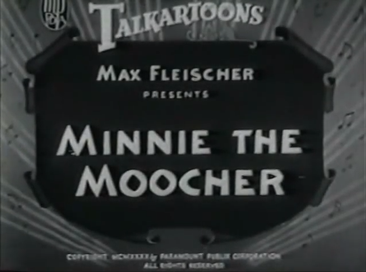
Betty Boop: Minnie the Moocher (1932): is an eerie, jazzy cartoon in which Betty elopes and ends up in a haunted cave where ghosts sing under the leadership of a spectral walrus voiced by the legendary jazz musician Cab Calloway. The legendary Minnie the Moocher (1932) movie is now popularly viewed as a free classic movie and a public domain movie that is easy to remember and provides a wonderful mixture of music, humor, and pre-Code animation.
Betty Boop: Minnie the Moocher (1932)
Minnie the Moocher (1932) is a short animated film by the series Talkartoon created by Fleischer Studios and released by Paramount Pictures. Under the direction of Dave Fleischer, with live-action shots and voice by Cab Calloway and His Orchestra, the short is starring Betty Boop and her pal Bimbo in one of the most recognized Betty Boop short movies of all time. It opened in New York City on January 1, 1932, and was generally released on February 26 of the same year.
Movie Background
- Director: Dave Fleischer (with animation direction by Willard Bowsky, uncredited).
- Producer: Max Fleischer.
- Studio: Fleischer Studios.
- Distributor: Paramount Pictures.
- Release year: 1932.
- Running time: Approximately 7–8 minutes.
- Animation: Willard Bowsky, Ralph Somerville, Bernard Wolf.
- Music: Lou Fleischer (uncredited) and Cab Calloway’s performance.
- Notable feature: The cartoon blends live-action footage of Cab Calloway performing with rotoscoped animation, where Calloway’s dance moves were traced to animate the ghostly walrus character.
The animated film gained popularity thanks to the inclusion of Calloway’s popular song “Minnie the Moocher,” which, in the year 1931, had already made its way into history as the first single of an African American artist to sell a million copies.
Movie Cast Table
At the start and finish of the movie, Cab Calloway is seen in live-action pictures; nevertheless, his actions were rotoscoped to produce the dim walrus that sings the title song in the cave.
Full Plot Summary
Minnie the Moocher (1932 film) commences with live-action shots of jazz bandleader Cab Calloway and his band playing instrumental rendition of St. James Infirmary Blues on stage. This pre-establishes this somber, musical atmosphere prior to the cartoon tale.
The cartoon part begins as Betty Boop is in her house, upset and quarrelling with her restrictive, Yiddish-speaking immigrants. Her parents rebuke her and Betty feels unheard and caged. Tired of the situation, she has to escape home.
Betty leaves her parents a note and sneaks out and meets with her boyfriend Bimbo who has his own bag packed and is about to leave. Betty sings verses of sad songs about being abused, emanating her anger over her family as they walk out of the house.
Soon, Betty and Bimbo end up roaming in a dark forest in the night. In search of shelter they go to a mysterious cave where they hope to avoid the cold and the darkness in the outside world.
Weird things begin to occur in the cave. Then the huge ghostly walrus comes, serpent-like in its movement with a weird, hypnotic motion. The rotoscoped footage of the real dance moves of Cab Calloway is used to bring the walrus to life, who then proceeds to sing the well-known jazz song, “Minnie the Moocher,” with the Cab Calloway scat singing and the call-and-response chorus of “hi de ho” in the song.
When the walrus acts, the cave is made alive with the ghosts, skeletons, goblins and other supernatural beings that attend the performance. Betty and Bimbo observe in growing horror as they see bizarre and disturbing images: skeletons drinking in a ghostly bar, phantom prisoners on electric chairs, a skeleton mother cat with vacant eye sockets suckling and sucking her vacant eyed kittens and other strange figures dancing and singing along.
The dreamy show proceeds with even more grotesque scenes: the dancing ghosts, floating heads and weird changes are all being choreographed to the haunting music by Calloway. This mood is amusing and scary at the same time, a combination of jazz-era nightclub and horrifying elements.
At some point of time, Betty and Bimbo become tired of it. Fully jeopardized by the spectral scene, they flee out of the cave in fear and as quickly as they may, the whole company of ghosts and spirits pursues them in the dark woods.
Betty is able to get home safely throwing herself under the covers of her bedbed shaking. She panics, and in her frenzy, rips the note she wrote to her parents away and all that is left is the line Home Sweet Home. The message is apparent: having gone through her scary experience, Betty understands that the world at home, despite the strict parents, is better than the frightening foreign world.
At the end of the cartoon Cab Calloway and his orchestra make a comeback in live-action film playing an instrumental version of the song Vine Street Blues as the credits appear.
Genre and Key Themes
The Minnie the Moocher (1932 film) is a jazz performance/surreal animation/pre-code musical comedy-horror film. It is a musical spectacle, a morality story, and an experimental animated movie.
Key themes include:
- Generational conflict: The argument between Betty and her immigrant parents is an expression of the cultural clashes of the 1930s between the old world ethics and the new world generation of flappers.
- The attraction and threat of freedom: It all sounds so exciting at first, and soon it turns out that the world outside may be frightening and unpredictable in many ways, as it is for Betty and Bimbo.
- Home and security: The cartoon has ended up providing the home sweet home message in which family and security is more important than independence and adventure.
- Jazz culture and race: The application of the Cab Calloway music and performance exposes African American jazz culture to mass animation, however, the ghostly cave backdrop has been seen as an attempt to offer African American musical talent in a safe, fantasy environment to white viewers.
- Pre-Code animation: The cartoon contains some risque visuals and drug-related innuendos in the song lyrics which would later be censored with the introduction of the more stringent Production Code in 1934.
Due to these aspects, Minnie the Moocher full movie is a captivating animation history and a reflection of the US culture of the first part of the 1930s.
Betty Boop: Minnie the Moocher (1932) Full Movie Watch and Download
Watch Betty Boop: Minnie the Moocher (1932) on Internet Archive:
🏛️ See Also
Dementia 13 (1963) – Francis Ford Coppola’s Chilling Gothic Debut
The Man Who Cheated Himself (1950) – A Classic Film Noir Gem Set in San Francisco
A Man Betrayed (1936) – Classic Republic Crime-Drama
Inner Sanctum (1948) – A Suspenseful Noir Thriller
Movie Review
The film Minnie the Moocher (1932) is considered to be one of the best cartoons featuring Betty Boop and a breakthrough in animation because of its rotoscoping and jazz music.
- Animation and images: The rotoscoped walrus, following the live dance act of Cab Calloway, has a flowing alien-like motion that was revolutionary at the time. The ghost scenes are surreal, disturbing, and unforgettable and combine humor with the real eeriness.
- Music: The highlight of the cartoon is the performance of Minnie the Moocher by Cab Calloway and his wild scat singing and catchy rhythm makes the scene with ghostly caves memorable. The live-action epilogue lends genuineness and the presence of charisma on the part of Calloway.
- Story: The musical and the visual spectacle has a simple plot–Betty runs away and learns a lesson, but it is used as a frame of the story. The immigrant stereotypes might be awkward to some of the modern viewers, yet the cartoon itself is a product of the time.
- Cultural influence: The cartoon contributed to the popularity of Minnie the Moocher more and exposed the music that Cab Calloway played to more people, particularly young children who may have not visited jazz clubs.
In general, the 1932 film Minnie the Moocher is an audacious and entertaining combo of music and animation that is still regarded today as a free classic movie and a public domain movie. It is a must to watch for the followers of Betty Boop, the early animation genre, and jazz history.
Movie Tags
Betty Boop Minnie the Moocher, Minnie the Moocher 1932, Minnie the Moocher full movie, Minnie the Moocher 1932 film, Betty Boop cartoon, Cab Calloway, Cab Calloway Minnie the Moocher, Max Fleischer, Dave Fleischer, Fleischer Studios, Paramount Pictures, jazz cartoon, pre-Code animation, rotoscope animation, 1930s cartoon, ghostly walrus, haunted cave cartoon, scat singing, Hi-de-ho, Betty Boop and Bimbo, Talkartoon series, classic cartoon, vintage animation, free classic movie, public domain movie, black and white cartoon, jazz age animation, classic Betty Boop.