
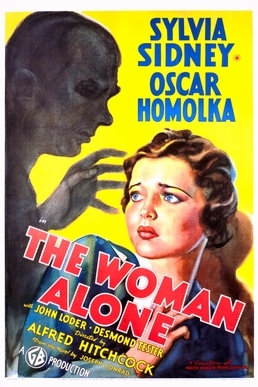
Wondered at one time how much a director will go to shock a viewer, one of the most obvious first answers is the film Sabotage (1936) directed by Alfred Hitchcock (1936). It is a claustrophobic, nerve-racking thriller, now a public-domain film in numerous countries, which transforms a typical London movie theater into the battleground of a terror attack – and dares to put in the hands of a child and a time bomb one of its most vicious twists.
Hitchcock, who, to most audiences, has been known for Rear Window or Psycho, Sabotage might seem like an earlier, more crude sketch of his obsession with guilt, innocence, flawed authority, the effect of suspense produced when we have more information than the characters do. Since the Sabotage (1936) complete film can be found freely on the internet and in traditional collections, it is one of those less well-known Hitchcock movies that people accidentally watch and never forget.
Movie Background Table
Historical Context and Cultural Relevance
Sabotage was made in the uneasy years between World War I and World War II, when Europe was simmering with political anxiety but the full scale of what was coming was not yet clear. Joseph Conrad’s original novel, published in 1907, dealt with Tsarist‑era anarchists and agents provocateurs. Hitchcock and his collaborators updated the scenario but deliberately blurred the politics. The saboteurs are from an “unnamed European country,” their motives vague, their ideology barely sketched.
Some modern viewers assume that unnamed power is Nazi Germany, especially given the 1936 timing. The film never confirms this, and Hitchcock later suggested that specific ideology interested him less than the emotional effect of random violence on ordinary people. Terrorism and “collateral damage” were not common themes in 1930s cinema, which is one reason Sabotage was controversial on release and banned outright in some countries, including Brazil, as a potential threat to public order.
In British film history, Sabotage sits at a key point in Hitchcock’s transition from domestic success to international reputation. It followed The 39 Steps and came out the same year as Secret Agent, further cementing his skill with espionage thrillers. Critics at the time recognized a director refining his “suspense machine”: The New York Times praised it as “a masterly exercise in suspense,” while Variety admired the “competent and experienced hand of the director” throughout.
Today, as Sabotage (1936) full movie circulates freely on streaming channels and colorized uploads, it functions as both a gripping thriller and a case study in how early Hitchcock shaped what we now expect from cinematic suspense.
Movie Cast Table
| Actor | Role |
|---|---|
| Sylvia Sidney | Mrs. Winnie Verloc |
| Oskar Homolka | Karl Verloc |
| Desmond Tester | Stevie, her young brother |
| John Loder | Sergeant Ted Spencer |
| Joyce Barbour | Renee |
| Matthew Boulton | Superintendent Talbot |
| S. J. Warmington | Hollingshead |
| William Dewhurst | The Professor (bomb‑maker) |
Cast Biographies: Faces Behind the Fear
Sylvia Sidney (Mrs. Verloc)
American actress Sylvia Sidney came to Britain for this one Hitchcock role, bringing with her a reputation for playing vulnerable but spirited women in crime dramas and social problem films. In Sabotage, she anchors the story emotionally as Winnie Verloc, an ordinary wife blindsided by the realization that the man she shares a bed with is a terrorist. Critics then and now often single out her “commanding lead performance” as one of the film’s great strengths, especially in the scenes after Stevie’s death when grief curdles into something more dangerous.

Oskar Homolka (Karl Verloc)
Homolka, a Czech‑born actor with a distinctive presence, plays Verloc not as a mastermind but as a weak, evasive man in over his head. User reviews and critics describe his Verloc as having a “cold stare, distinctive accent, clumsy detachment, and near-total absence of empathy.” That ordinariness — a saboteur who looks more like a nervous shopkeeper than a supervillain — makes him more unsettling and more plausible.
Desmond Tester (Stevie)
Teenage actor Desmond Tester plays Stevie, Winnie’s younger brother, as an ordinary London schoolboy: helpful, fidgety, a little naïve. Graham Greene, who otherwise praised the film, found Tester “invincibly distasteful,” but that reaction itself underlines how risky Hitchcock’s use of Stevie is. By making the boy so recognizably everyday, the director heightens the audience’s discomfort when he’s drawn into the plot.
John Loder (Ted Spencer)
Loder’s Sergeant Ted Spencer is the undercover Scotland Yard man posing as a greengrocer’s assistant. Greene thought Loder unconvincing, but the character’s slightly bland charm works in contrast to Verloc’s furtiveness and Winnie’s emotional volatility. He’s the type of solid, decent man Hitchcock often uses as a counterweight to his more twisted figures.
Full Plot Summary
London, mid‑1930s. Suddenly, the city’s lights blink out. In a cinema near the center of town, the screen goes dark, the projector whirs uselessly, and the audience erupts in frustration, demanding their money back.
Upstairs, Karl Verloc, the theater’s owner, slips in through a back entrance. He quietly washes sand off his hands — a clue we see but his wife does not. Seconds later, his wife Winnie comes to fetch him, surprised he’s not down dealing with the customers. Verloc stretches, pretends he’s just woken from a nap, and feigns confusion about the blackout.
He urges Winnie to refund the tickets, assuring her he has “some money coming in” anyway. She reluctantly gathers the box‑office cash, but before she can hand it over downstairs, the lights snap back on. The audience, mollified, returns to their seats. In a newspaper office the next day, the incident is treated almost as a joke: saboteurs, the papers say, have only managed to cause a mild inconvenience.
For Verloc’s employers, this is not amusing. In a discreet meeting, he is scolded by his contact: sand in a generator bearing isn’t enough. The shadowy group behind him — foreign saboteurs from an unnamed European country — wants real panic. They instruct him to escalate. He is to place a parcel of “fireworks” at Piccadilly Circus Underground station on Saturday, timing the blast to coincide with the Lord Mayor’s Show, when crowds will be thickest.
Verloc balks. He insists he didn’t sign up to kill people, that he’s uncomfortable with bloodshed. His contact is blunt: if he won’t do it himself, he must find someone who will. Verloc is given an address: a bird shop whose owner, a sinister man known as “the Professor,” also happens to be a bomb‑maker.
Meanwhile, Scotland Yard has quietly taken an interest in Verloc. Superintendent Talbot suspects the blackout wasn’t an accident and that the mild‑mannered cinema owner might be involved. He assigns Sergeant Ted Spencer to go undercover as a greengrocer’s assistant in the shop next to Verloc’s theater. Ted’s job is to observe, insinuate himself, and see what he can learn.
As part of his cover, Ted befriends Winnie and her younger brother Stevie, taking them out to a jovial dinner and playing the part of a helpful neighbor. At this point, the police genuinely don’t know whether Winnie is complicit in anything or simply another pawn.
In the bird shop, Verloc meets the Professor. Among cages of canaries and domestic chaos, the bomb‑maker lays out the plan. He will build a time bomb set to explode at 1:45 p.m. on Saturday. Verloc’s only task is delivery. They agree to disguise the device as a birdcage, addressed to Stevie as a “present” — a chilling detail that points straight at the film’s most notorious sequence.
Later, in the flat above the cinema, members of the conspiracy quietly gather in Verloc’s living room. They speak in low voices about strategy and risk. Downstairs, Spencer tries to eavesdrop, but he’s spotted and recognized by one of the men. The meeting breaks up abruptly; the saboteurs scatter, spooked by the confirmation that the police are on their trail.
Verloc, rattled, admits to Winnie that the police are investigating him, but insists he’s done nothing wrong. She wants to believe him. Spencer, on the other hand, grows increasingly convinced that Verloc is at the center of something dangerous.
Saturday arrives. The canary cage, with the bomb hidden inside, is delivered to the Verlocs’ flat. Spencer comes by with Stevie, trying gently to sound out Winnie about her husband. Verloc watches them talking and feels the pressure closing in.
Worried that he’s being followed and desperate to insulate himself, Verloc makes a terrible decision. Instead of delivering the package himself, he asks Stevie to do it. He tells the boy it’s just a film canister that needs to be dropped at the cloakroom under Piccadilly Circus. Stevie, flattered and eager to help, agrees.
What follows is classic Hitchcock suspense stripped to its cruel essentials. We, the audience, know the parcel is a bomb set to explode at 1:45. Stevie does not. As he makes his way through London on a crowded bus, he’s delayed again and again — street parades, traffic, a knife‑sharpener’s performance that catches his eye. The camera cuts repeatedly to clocks, to the ticking mechanism, to the boy’s innocent face.
In most thrillers, the last‑minute rescue would come. Here, it does not. The bomb detonates on the bus, killing Stevie and others in a jarring, off‑screen blast that Hitchcock would later say he regretted as an “abuse of cinematic power.” At the time, it stunned audiences. Even now, knowing it’s coming, the moment feels like a line being crossed.
Back at the cinema, Winnie is devastated by the news. When Verloc finally confesses his role, he tries to shift blame, arguing that if the police hadn’t been watching him so closely, he’d have delivered the bomb himself and Stevie would still be alive. The excuse only deepens her horror.
That evening, as they sit down to dinner, something inside Winnie breaks. In one of the film’s most quietly harrowing scenes, she takes a carving knife and, in a sudden blur of movement, stabs her husband to death at the table.
Shortly afterward, Spencer arrives, ready to arrest Verloc. It doesn’t take him long to understand what has happened. He urges Winnie not to confess; he insists that after what Verloc did, the law might see it differently, or at least that she deserves protection from immediate self‑incrimination.
Shaken and guilt‑ridden, Winnie struggles with the urge to tell the truth. She begins to blurt out her confession to a uniformed policeman. At that exact moment, elsewhere in the building, the Professor slips into Verloc’s flat to retrieve the incriminating birdcage. The police have followed him. Realizing he’s cornered, the bomb‑maker detonates an explosive belt he’s been wearing as a final escape.
The blast rips through the building, destroying Verloc’s body and plunging the scene into chaos. Afterwards, the superintendent isn’t sure whether he heard Winnie say “my husband is dead” before or after the explosion — and with physical evidence gone, her responsibility can no longer be clearly fixed.
In the final shots, Winnie and Ted walk away together through the London crowd, an uneasy pair bound by shared trauma and a crime that the world will probably never fully understand.
Unique Plot and Character Analysis
Sabotage stands out in Hitchcock’s British period for how relentlessly it focuses on the collateral victims of political violence rather than on the mechanics of the conspiracy itself. We never get a detailed manifesto from Verloc’s handlers. Their cause is opaque by design. What matters is what their orders do to one small household above a cinema.
Verloc is not a charismatic ideologue. He’s weak, financially dependent, and morally compromised. His participation in the plot seems less driven by belief than by a mixture of fear and the promise of “money coming in.” That weakness is crucial: it makes him plausible as someone who would use his own brother‑in‑law as a courier and then rationalize it as the fault of others when it goes wrong.
The moral and emotional focus point of the film is Winnie. At first, she is merely a wife doing all she can to maintain a failing business and take care of her teenage brother. Stevie is made more than a rarity in thrillers of that time when she dies: a mourning woman whose mourning becomes deadly power. The fact that she killed Verloc is horrifying and psychologically valid. Hitchcock and Sylvia Sidney make it apparent that she is doing it out of a combination of fury, feeling of guilt and knowing there is no alternative method to put the scales even.
The death of Stevie, which Hitchcock later referred to as one of his mistakes, is as well the key that unlocks the statement behind the film namely that suspense is not always fun and that allowing the audience to enjoy the tension of a ticking bomb may lean more towards sadism once the payoff is that much more cruel. Later Francois Truffaut accused the scene of being an abuse of power in film-making; Hitchcock himself admitted that the act of killing the boy on screen was a violation of a silent agreement with the audience. That criticism made of himself tells you how earnest he was about the ethics of suspense.
Ted Spencer, for his part, embodies the limits of institutional protection. He’s diligent, concerned, even fond of Winnie and Stevie, but he fails to prevent the worst. The final ambiguity — walking away with Winnie, possibly as a romantic future, possibly just as a companion in shared damage — raises questions about justice that the film wisely doesn’t resolve.
Genre and Key Themes
Sabotage is a thriller with strong elements of spy and psychological drama. Within that frame, several themes stand out:
- Fear and everyday life
Terror isn’t depicted in grand settings but in cinemas, buses, bird shops, and cramped flats. The ordinary spaces are what make the “sabotage” feel invasive. - Morality and complicity
Verloc’s refusal to fully own his actions, the shadowy backers’ distance, and even Scotland Yard’s failure to protect Stevie all feed a picture where no adult emerges clean. - Power and powerlessness
Winnie has almost no power in the public sphere, but in her own kitchen, at her breaking point, she asserts a violent control that changes everything. - Justice vs. legality
The destruction of Verloc’s body and the confusion around Winnie’s half‑confession mean the legal system never truly addresses what happened. The only form of “justice” comes from personal action and terrible chance.
These themes keep Sabotage from being just an exercise in technique. They give the suspense a lingering unease that feels closer to modern terror narratives than many of its 1930s peers.
Behind-the-Scenes Facts and Trivia
- Sabotage is sometimes confused with Hitchcock’s Secret Agent (also 1936) and his later Saboteur (1942); only this one is based on Conrad’s novel and set largely in a cinema.
- Hitchcock changed Conrad’s Verloc from a shopkeeper to a cinema owner, allowing him to play with film‑within‑film parallels — comedies on the screen contrasting with tension behind the scenes.
- He originally wanted Robert Donat (from The 39 Steps) for the role of Ted, but Donat’s chronic asthma forced him to cast John Loder instead.
- On release, Sabotage was both praised and attacked. C. A. Lejeune, usually a Hitchcock supporter, criticized the bus explosion as needlessly cruel.
- The film was banned in Brazil for fear it might inspire or normalize acts of political violence, a testament to how provocative the subject matter seemed in 1936.
- In later interviews with Truffaut, Hitchcock said he “went too far” with Stevie’s death and learned never again to play that kind of trick on an audience, even though he would continue to toy with audience identification in other ways.
These production stories deepen the sense that Sabotage was a creative risk, not just another assignment.
Critical Reception and Legacy
At the time, critics were largely impressed. The New York Times called it “a masterly exercise in suspense,” praising Hitchcock’s control of tension. Variety lauded it as “smart” and “business‑like” from start to finish, though it noted that the terrorists’ motivation was obscure. Graham Greene, writing in The Spectator, went further, saying that “for the first time [Hitchcock] has really ‘come off’,” highlighting the children’s matinee scene as an “ingenious and pathetic twist” uniquely the director’s.
The main reservations centered on two performances: Greene found Loder’s detective unconvincing and Tester’s Stevie off‑putting, while some viewers and critics recoiled at the decision to actually kill the child rather than save him at the last second.
Over time, Sabotage has been categorized as a “lesser Hitchcock” only in the sense that it’s less famous than his American masterpieces. Among scholars and fans, it’s often admired for its boldness and tight construction. Modern essays note how eerily contemporary its themes of urban terror and innocent casualties feel, even as its politics remain intentionally vague.
As a public domain movie in many collections now, Sabotage (1936) full movie is frequently recommended in “beginner’s guides to Hitchcock” as a way to see his suspense instincts in a rawer, more experimental form. It may not be the first title people mention, but those who see it rarely forget the bus, the clock, and the impossible moral knot at its center.
Sabotage (1936) Full Movie Watch and Download
Watch Sabotage (1936) on Internet Archive:
🏛️ See Also
Woody Woodpecker in Pantry Panic (1941) – Classic Winter Survival Cartoon Full Movie
Popeye for President (1956) – Classic Election-Day Cartoon Full Movie
The Lost World (1925) – Silent Dinosaur Adventure Classic | Watch Free
The Floorwalker (1916) – Charlie Chaplin’s First Mutual Comedy | Watch Free
Editorial Movie Review
Today, when watching Sabotage, you can touch the genius as well as the crudities. It is a blend of acting, with Sylvia Sidney performing with great sincerity, particularly in the second part, where one can see that she has been shocked, grieved, and determined to kill someone. Verloc, by Oskar Homolka, is a man too badly nice, a small-time person whose fear makes him more chilling than out and out sadism. John Loder is repairable instead of memorable, yet that slightness is arguably what lets Sidney take the emotional frame.
The direction of Hitchcock is assured. The premature blackout, the scene with the bird-shop, and, last but surely not the least, the bus set-piece, display that the director already knows how to time the suspense, and where to hold back information. The narration is sparse: it is only 76 minutes, and with a lean tone the story shifts towards the mundane and into the ominous without ever truly letting the reader unwind.
The back and forth in the path of Stevie is deliberately torturous. Probably whether you feel that to be masterful or manipulative can all depend on how tolerant you are to seeing a doomed character meander in ignorance as the camera keeps track. Hitchcock himself, even, in the retrospect, felt that he had crossed a line. But as a viewer, one can hardly disagree with the effect of the sequence, it is one of the most discussed excerpts of his whole British time.
Overall, Sabotage is not as polished as later thrillers like North by Northwest, but it crackles with a kind of moral danger those slicker films sometimes smooth over. It asks what happens when terror doesn’t just threaten the city “out there” but detonates at the center of a family table, and then it refuses to give a clean answer.
As a free classic movie now widely available, Sabotage (1936) is an easy recommendation for anyone curious about Hitchcock beyond the greatest hits. It might not comfort you, but it will remind you just how early he started testing the boundaries of what audiences could bear to watch.
Movie Tags
Sabotage 1936 full movie, Sabotage 1936 film, Alfred Hitchcock early thriller, Sylvia Sidney Mrs Verloc, Oskar Homolka Karl Verloc, British espionage thriller, free classic movie, public domain movie, London cinema terrorism story, Joseph Conrad Secret Agent adaptation, Hitchcock British period, ticking bomb bus sequence, psychological suspense film, Scotland Yard undercover detective, classic black and white mystery thriller